Do You Need to Close Your Eyes to Manifest? The Truth About Visualization Technique
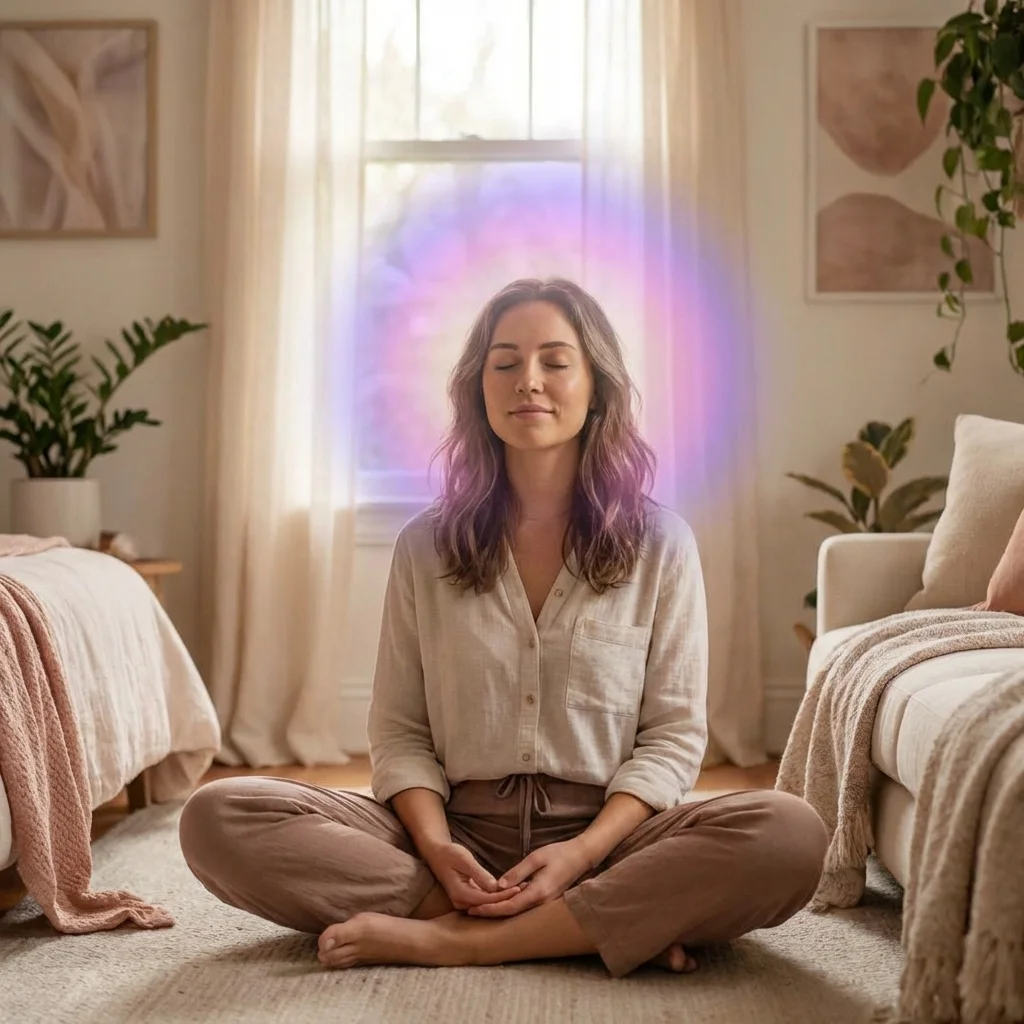
You sit down to manifest. Close your eyes. And... nothing. You can't see anything. Just darkness and random thoughts. Now you're frustrated, wondering if something's wrong with you. Do you have to close your eyes? Is this the only way to manifest? Let's clear this up.
The Short Answer
No, you don't have to close your eyes to manifest.
Closing your eyes is a common recommendation because it helps most people focus inward and visualize without distraction. But it's a suggestion, not a rule.
Many successful manifestation techniques work with eyes open. And even visualization can happen without clear mental images.
Let's explore why.
Why People Recommend Closing Eyes
Reduces External Distraction
When your eyes are open, your brain processes visual information constantly. Closing your eyes removes that input, making it easier to focus on internal imagery.
Accesses Different Brain States
Eyes closed often correlates with alpha and theta brainwaves—more relaxed, introspective states. These can be helpful for impressing the subconscious mind.
Cultural Association
We associate closed eyes with meditation, prayer, and inner focus. This association cues your mind that "inner work is happening."
Works Well for Most People
For the majority, eyes-closed visualization is more effective. That's why it's the default recommendation.
But: "Works for most people" doesn't mean "required for everyone." If eyes-closed doesn't work for you, alternatives exist.
When Eyes-Closed Doesn't Work
Some people struggle with eyes-closed visualization:
Aphantasia
Some people have aphantasia—the inability to create voluntary mental imagery. They can't "see" pictures in their mind regardless of whether eyes are open or closed. Estimates suggest 2-3% of the population experiences this.
If you have aphantasia, visualization isn't your path. Other techniques work instead (more on this below).
Racing Thoughts
For some, closing eyes triggers anxiety or racing thoughts rather than calm focus. The darkness becomes a space for worries to amplify rather than intention to clarify.
Physical Discomfort
Certain conditions (eye strain, headaches, anxiety disorders) can make extended eyes-closed sessions uncomfortable.
Simply Doesn't Feel Natural
Some people just focus better with eyes open. There's nothing wrong with this.
Eyes-Open Manifestation Techniques
Good news: many powerful methods don't require closing your eyes.
Vision boards are visual—you LOOK at images that represent your desires. Eyes very much open. Gazing at your vision board regularly imprints images on your subconscious without any need for mental visualization.
Written Techniques
Scripting involves writing your desires as if already manifested. You're looking at the page as you write. Same with journaling manifestation methods.
Repeating affirmations throughout the day doesn't require closed eyes. You can affirm while walking, working, or doing anything.
Two-Cup Method
This physical technique uses actual glasses of water. Completely eyes-open.
Walking Visualization
Some people visualize best while moving—walking in nature, for example, while imagining their desired life. Eyes open, but attention partially inward.
Acting As If
Living your day AS IF your manifestation has already happened doesn't require any specific eye position. You're embodying the feeling in real-world action.
Key insight: Manifestation happens through focused intention, feeling, and belief—not through a specific eye position. Find the method that creates those states for YOU.
What If You Can't Visualize at All?
Visualization is popular, but it's not the only path. If you can't see mental pictures:
Focus on Feeling Instead
Neville Goddard emphasized feeling, not visualization. Ask: "How would I FEEL if this were already true?" Generate that feeling. That's manifestation.
You don't need to see anything—just feel the relief, joy, gratitude, or naturalness of having your desire.
Use Affirmations
Affirmations work through repetition and belief-building, not imagery. Saying "I am wealthy" repeatedly (with or without eyes closed) impacts your subconscious over time.
Write Your Reality
Scripting uses words instead of pictures. Write detailed descriptions of your desired life as if it's already happening. This engages your imagination through language.
Listen to Audio
Subliminals and sleep affirmations work while you're doing other things—no visualization required.
Physical Techniques
Methods like the Two Cup Method or Whisper Method use physical actions rather than mental imagery.
The Real Point
Here's what actually matters for manifestation:
1. Clarity of Desire
Do you know what you want? Be specific.
2. Emotional Connection
Can you feel what it would be like to have it? Evoke the emotion.
3. Belief
Do you believe—on some level—that this is possible for you?
4. Consistency
Are you practicing regularly, not just once?
5. Alignment Between Desire and Self-Concept
Does your self-concept support this manifestation?
Notice: None of these require a specific eye position.
Experiment and Find Your Way
Different techniques work for different people. Here's a simple experiment:
Week 1: Eyes-Closed Visualization
Try classic eyes-closed visualization for a week. 10-15 minutes daily. Note how it feels and how effectively you focus.
Week 2: Eyes-Open Techniques
Try vision board gazing, scripting, or walking visualization. Same time investment. Note your experience.
Week 3: Feeling-Based (No Imagery)
Try just generating the feeling of your wish fulfilled without trying to see anything. Eyes open or closed—your choice.
Evaluate
Which felt most natural? Which generated the strongest emotional response? Which will you actually do consistently?
Go with what works for you.
Practical Tips If You Prefer Eyes-Closed
If eyes-closed visualization IS your preferred method, here are some tips:
Start With Relaxation
Begin with a few minutes of deep breathing or body scanning. This calms the mind before visualization.
Don't Force Images
Let mental images come naturally. If they're vague, that's fine. Focus on feeling even more than seeing.
Use Guided Meditations
Audio guidance keeps your mind focused when it wants to wander. Many Dr. Joe Dispenza style meditations work well.
Keep Sessions Short Initially
5-10 minutes is plenty when starting. Gradually extend as it feels natural.
Practice Regularly
Like any skill, visualization improves with practice. It may be difficult at first but get easier over time.
Final Thoughts
The "close your eyes to manifest" instruction is a helpful guideline—not a law.
If it works for you, great. Use it.
If it doesn't, you have plenty of alternatives. Vision boards, scripting, affirmations, physical techniques, feeling-based approaches—all legitimate.
Manifestation is ultimately about focused intention and emotional alignment. Find the approach that creates those states for you personally.
Your eyes can be open, closed, or dancing around the room. What matters is where your attention and feeling are pointing.
Point them at your desires.
Activate Your Wealth DNA
Struggling to manifest abundance? Your Root Chakra might be blocking your financial flow. Discover the 7-minute audio that activates your wealth potential.